
 8531 N. New Braunfels Ave, Suite 100, San Antonio, TX 78217
Call Us for a Free Consultation
 210-535-0870


Is My Business Big Enough To Need an Employee Handbook?
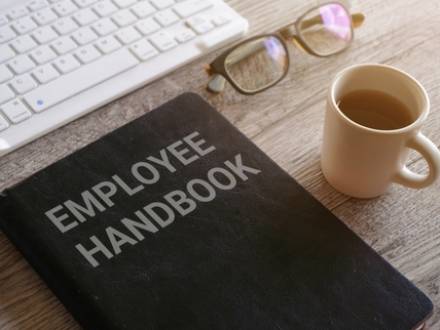 There is no strict requirement for Texas employers to provide a handbook to employees. However, it is often advisable to have one to protect from lawsuits and legal risk later down the line. Even if you run a small business, having an employee handbook prepared is in your best interests.
Our experienced Comal County, TX business lawyer has over 15 years of experience helping small business owners with legal matters. If you have any questions about your obligations as an employer, Geoff Mayfield, Attorney at Law, can provide you with answers and take preventative measures to shield you from legal risk.
What Should a Texas Employee Handbook Include in 2026?
A small business does not need hundreds of employees before an employee handbook becomes useful. Even a company with a small staff can run into disputes over pay, attendance, discipline, harassment, or time off. A handbook gives employees clear rules, and it gives employers a written record of what those rules are.
Discrimination Policies
A handbook should explain that the business does not allow discrimination in the workplace. This section should say that hiring, firing, promotion, pay, training, and other job decisions will not be based on a protected characteristic. A clear policy helps employees understand their rights, and it helps managers understand their duties. Title VII of the Civil Rights Act of 1964 also bars employers with 15 or more employees from making job decisions based on race, color, religion, sex, or national origin.
This section should also explain how an employee can report discrimination. Employees should know who to speak to, how to make a complaint, and what will happen after a complaint is made. A policy that only says discrimination is banned is not enough if workers have no idea how to raise a concern.
Small businesses sometimes assume these rules matter only to large companies. That can be a costly mistake. Even a small employer can face serious claims, legal expenses, and damage to its reputation. A handbook can reduce confusion and show that the company takes workplace fairness seriously.
Anti-Harassment Policies
An anti-harassment policy deserves its own section. It should not be buried inside a broader discrimination paragraph. Harassment complaints can involve supervisors, coworkers, vendors, clients, or customers. Employees need to know that the business will not ignore this kind of conduct.
This section should describe the kinds of behavior that may violate the policy. That can include unwanted sexual comments, repeated insults based on race or religion, offensive jokes, threats, touching, or other behavior that creates a hostile work environment.
The policy should also explain how to report harassment. It is wise to give employees more than one reporting option. For example, a worker should not be forced to complain only to the person who is causing the problem. The handbook should say that complaints will be reviewed promptly and as fairly as possible.
Disciplinary Procedures
A handbook should explain how workplace discipline is generally handled. Employees need to know what kinds of conduct may lead to warnings or termination. Employers also benefit from having a written system that encourages consistency.
This part of the handbook may address things like repeated lateness, insubordination, dishonesty, safety violations, fighting, drug or alcohol use at work, misuse of company property, or attendance problems. The rules should fit the type of business. A construction company may need different rules than a small office or retail store.
Some employers use progressive discipline. This may include a verbal warning, a written warning, a final warning, and termination. Others reserve the right to skip steps when the conduct is serious. Either approach can be explained in the handbook.
Sick Leave and Time Off
Employees often have the most questions about time off. A handbook should explain what kinds of leave the business offers and how workers request it. This may include vacation, sick time, personal days, holiday schedules, jury duty, military leave, and other absences.
The handbook should state whether paid time off accrues over time and whether unused time carries over. It should also explain whether employees are paid for unused leave when employment ends. It should also explain call-in rules. For example, it may state when an employee must notify a supervisor about an illness or emergency absence.
Texas employers should also be careful to follow state and federal leave laws that may apply to their workforce. A handbook should match the real policy being used, not an online template copied from a different state.
Is Texas an "At Will" Employment State?
Texas is generally an at-will employment state. That means an employer can usually end employment at any time. Likewise, an employee can usually leave at any time, for almost any lawful reason, or for no stated reason at all. Still, that rule has important limits. An employer cannot fire someone for an unlawful reason, such as illegal discrimination or retaliation. A handbook should make that clear.
An at-will statement is one of the most important parts of a Texas employee handbook. It helps show that the handbook is not meant to be a contract and that employment is not guaranteed for a set period of time. Without that kind of language, an employer may leave room for arguments that handbook promises changed the employment relationship.
How Can an Employee Handbook Protect Texas Employers?
If an employee claims he or she was treated unfairly, the handbook may help show what rules were in place and whether the worker had notice of them. That does not guarantee the employer will win, but it can make a major difference.
A handbook can also improve daily management. Supervisors are less likely to make inconsistent decisions when they have written policies to follow.
Another benefit is prevention. Many workplace disputes start because expectations were never clearly explained. A handbook answers those questions before they turn into bigger problems.
Contact a Comal County, TX Small Business Lawyer Today
A handbook should fit your actual business, your workforce, and the way you operate day to day. Geoff Mayfield, Attorney at Law, can review your current policies, identify gaps, and help you create a handbook that supports your business instead of creating new risks. Call 210-535-0870 to schedule your free initial consultation with our Wilson County, TX business law attorney today.


8531 N. New Braunfels Ave, Suite 100, San Antonio, TX 78217
210-535-0870